


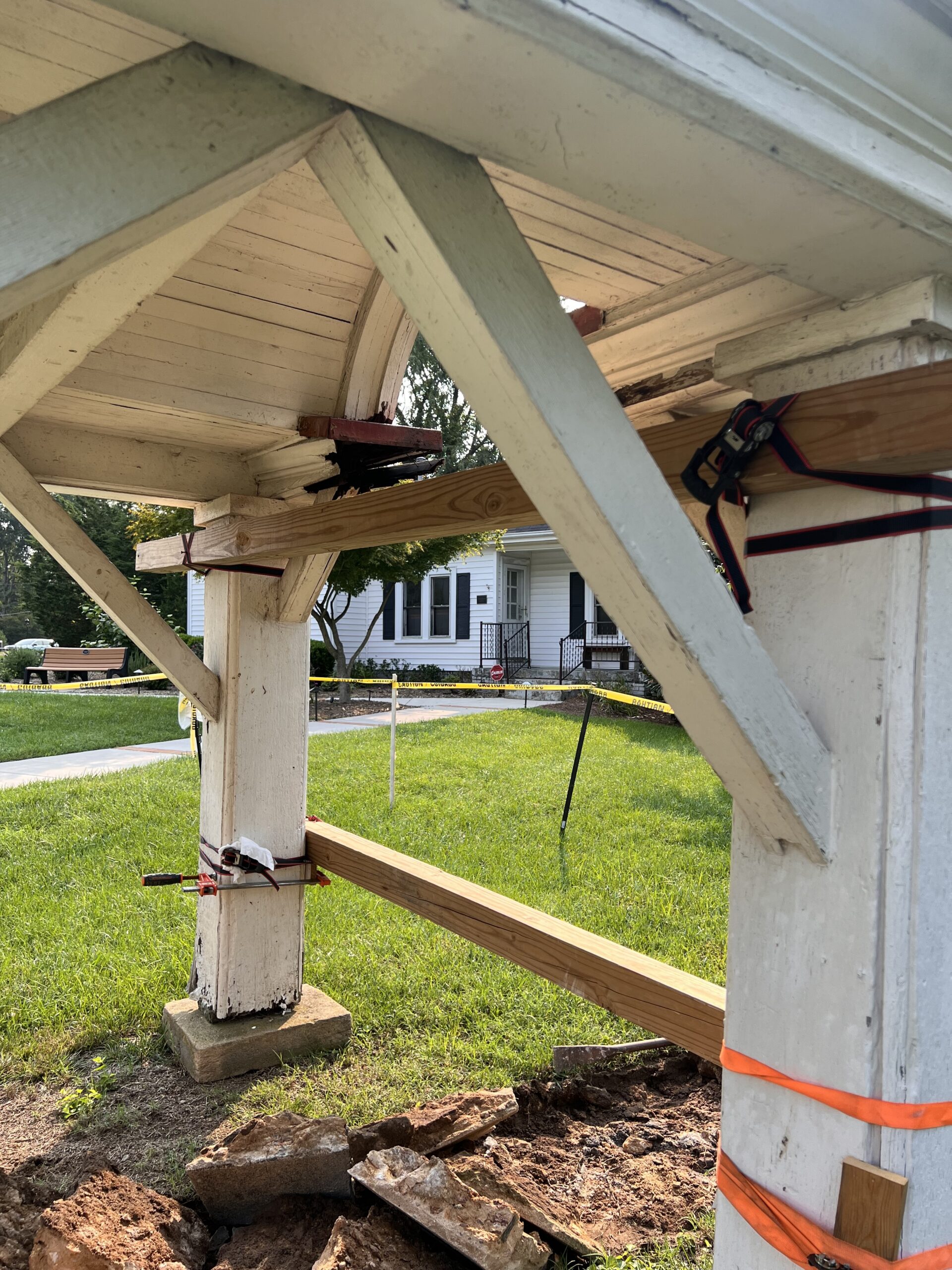
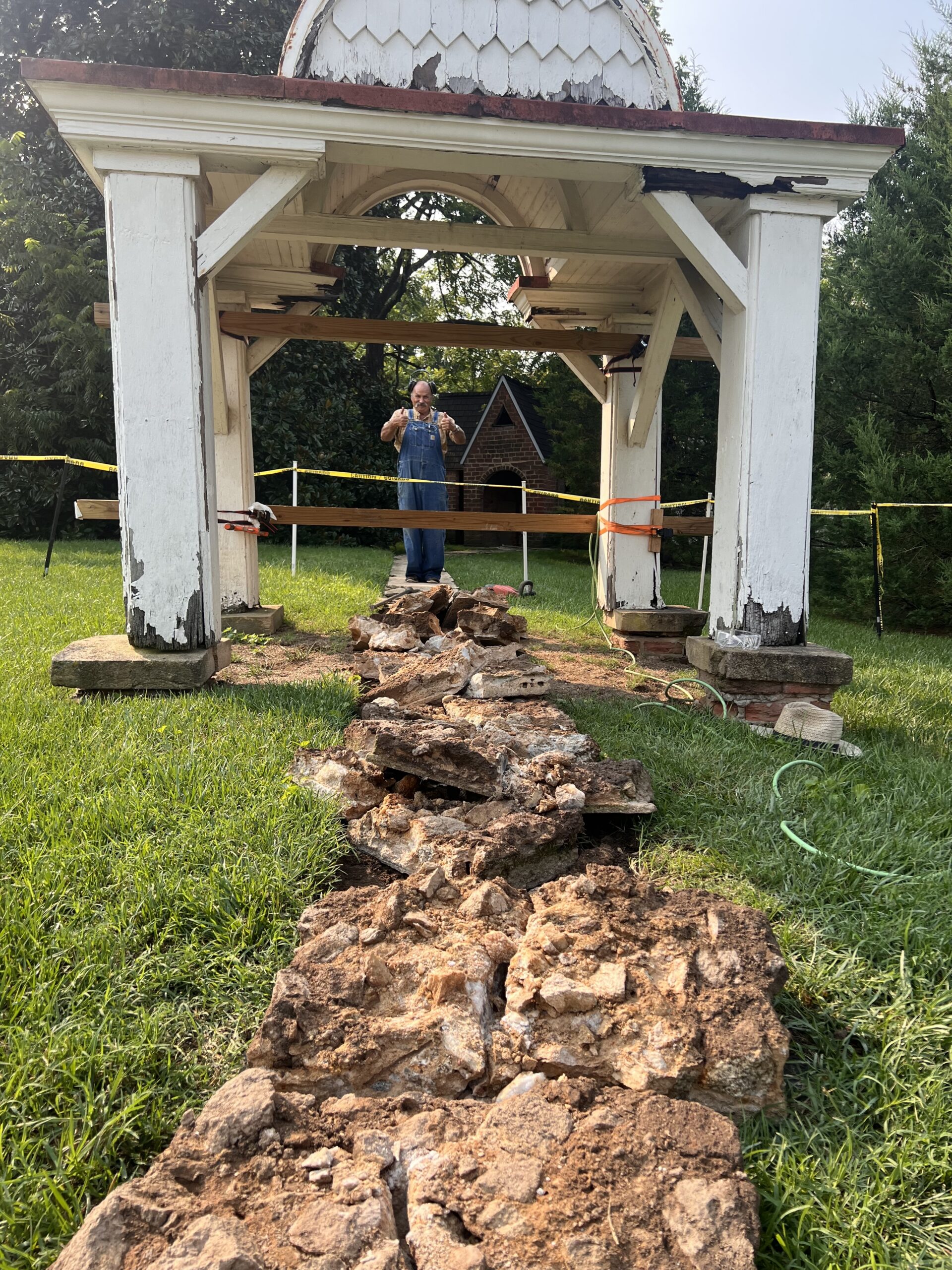
Visitors arriving at Körner’s Folly may have noticed that work is underway around the historic pergola that once served as a children’s playhouse as well as stable entrance. Although the pergola has long been one of the property’s quieter architectural features, it remains an important part of the landscape Jule Körner created, and preserving it requires the same careful attention we give to the house itself.
The project is being led by preservationist David Gall, with additional expertise provided by an architect, structural engineer, and archaeologist. Together, the team is studying the pergola not as an isolated structure, but as part of a larger historic landscape shaped by its materials, construction, foundations, surrounding soil, and patterns of use.
The first phase of work has focused on structural stabilization. Like many historic outdoor structures, the pergola has endured decades of exposure to rain, sun, shifting soil, and changing vegetation. Before its decorative details can be addressed, the structure must first be made stable and secure. Preservationist and contractor Dan Ledbetter has been working carefully with the project team to support the pergola while evaluating how its surviving historic materials can be retained. His approach involves using temporary and reversible bracing to add more support for the vertical columns while plans for restoration take shape.
Work has also begun on the surrounding site and pathway. Removing portions of the path has made it possible to better understand conditions at the base of the structure and address the factors contributing to its movement over time. The involvement of an archaeologist helps ensure that ground disturbance is approached carefully and that any evidence uncovered during the work is properly observed and documented.
This type of progress is not always dramatic or immediately visible, but it is essential. Successful preservation often begins below the surface, with drainage, soil, foundations, and the relationship between a structure and the landscape around it.
One of the central goals of the project is to preserve as much of the pergola’s historic fabric as possible. Rather than replacing the materials outright, we are approaching the work incrementally: stabilizing what remains, documenting existing conditions, consulting across disciplines, and making thoughtful decisions about each repair. The weathering, patina, and irregularities of the original materials are part of the pergola’s story. Preservation does not mean making an old structure appear brand new; it means allowing it to continue while retaining the evidence of its age, craftsmanship, and use.
There is still more work ahead, including repairs to the pergola’s architectural and decorative elements. We will continue sharing photographs and updates as the project progresses. For now, we are pleased to see this distinctive part of the Körner’s Folly landscape standing more securely, and grateful for the expertise, patience, and close attention that meaningful preservation requires.
At Körner’s Folly, preservation is rarely a single dramatic transformation. More often, it is a series of careful choices: supporting a leaning post, uncovering the ground beneath a path, studying an old joint, or pausing before deciding what should be replaced. Each small decision helps ensure that the house and its surrounding landscape remain available for future generations to encounter, study, and enjoy.