


Collections Spotlight: Doré Körner’s Salem College Yearbook

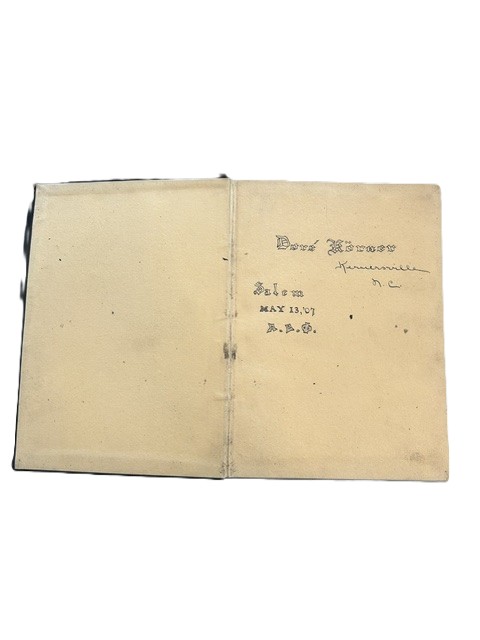
In honor of the beginning of the school year in America, the Collections Spotlight for the month of August highlights Doré Körner’s 1907 Salem College Sights and Insights Yearbook of which she was Editor-in-Chief. A collection of school organizations, poetry, essays, sketches and photographs, this yearbook provides a glimpse into the interests of the girls who matriculated through America’s oldest college for women located in Winston-Salem, North Carolina.
College yearbooks developed from earlier traditions of student keepsakes in the late 18th and early 19th centuries, when graduates compiled handwritten albums filled with class lists, poems, essays, and personal notes. As printing technology improved and photography emerged in the mid-1800s, these informal collections evolved into bound, published volumes that documented campus life more systematically. By the late 19th century, yearbooks had become a staple of college culture in the United States, typically featuring senior portraits, student organizations, athletic teams, and advertisements from local businesses. They served not only as personal mementos but also as institutional showcases, highlighting a college’s identity, traditions, and community.
For Doré Körner’s personal yearbook, this period is often considered a “golden era” for college annuals due to the transition into the modern format we recognize today. Advances in photographic reproduction, particularly halftone printing, allowed for clearer and more abundant images, shifting the focus from text-heavy volumes to visually engaging publications, and most showcasing personalized artistic expressions. Yearbooks from this era also expanded to include candid photography, humor sections, class predictions, and detailed coverage of campus life, making them more personal and dynamic.
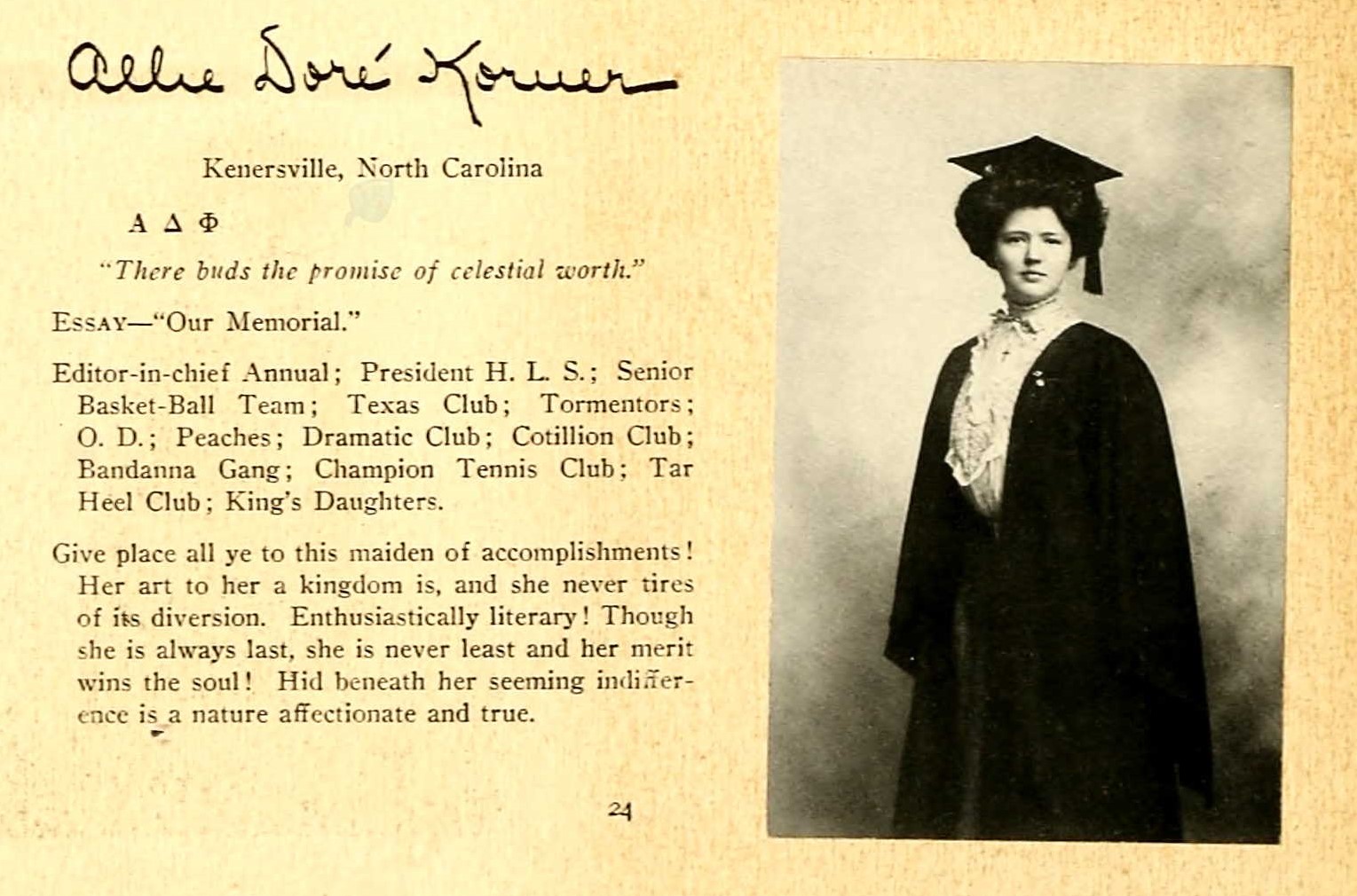
Image of Doré Körner in her graduation cap and gown found on page 24 of the 1907 Sights and Insights Yearbook. To the left of her image, it showcases the various organizations which she held membership, alongside her senior quotation below.
Salem College’s yearbook, Sights and Insights, was published from 1905 to 2011. In 1907, during only its third year of publication, Doré Körner served as Editor-in-Chief for her senior class annual and made a distinctive mark on the young tradition. Under her leadership, the yearbook documented campus life in rich detail, highlighting student activities, specialty clubs, and organizations. Notably, it also featured published sketches in color, many of which were created by Doré herself, signed “A. Doré.”
In addition to her artistic contributions, Doré authored several poems and essays included in the volume and played a key role in organizing its structure and layout. Her involvement extended well beyond the yearbook, as she was an active participant in campus life through her engagement in clubs, sororities, and athletic organizations. Together, her editorial leadership and personal contributions reflect both her creative influence on Sights and Insights and her deep connection to the growing community at Salem College.
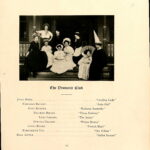
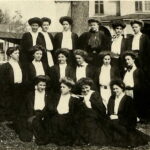
Below are images of the various club photos, sororities, and personal drawings she created as part of her time at Salem College found inside the 1907 Sights and Insights. To learn more about the various organizations and publications Doré took part in during her time at Salem College, check out the Virtual Exhibit “Organizing Ambition: The Role of Women and Community during the Gilded Age.”


From the Archives: Gilmer Körner at Trinity College
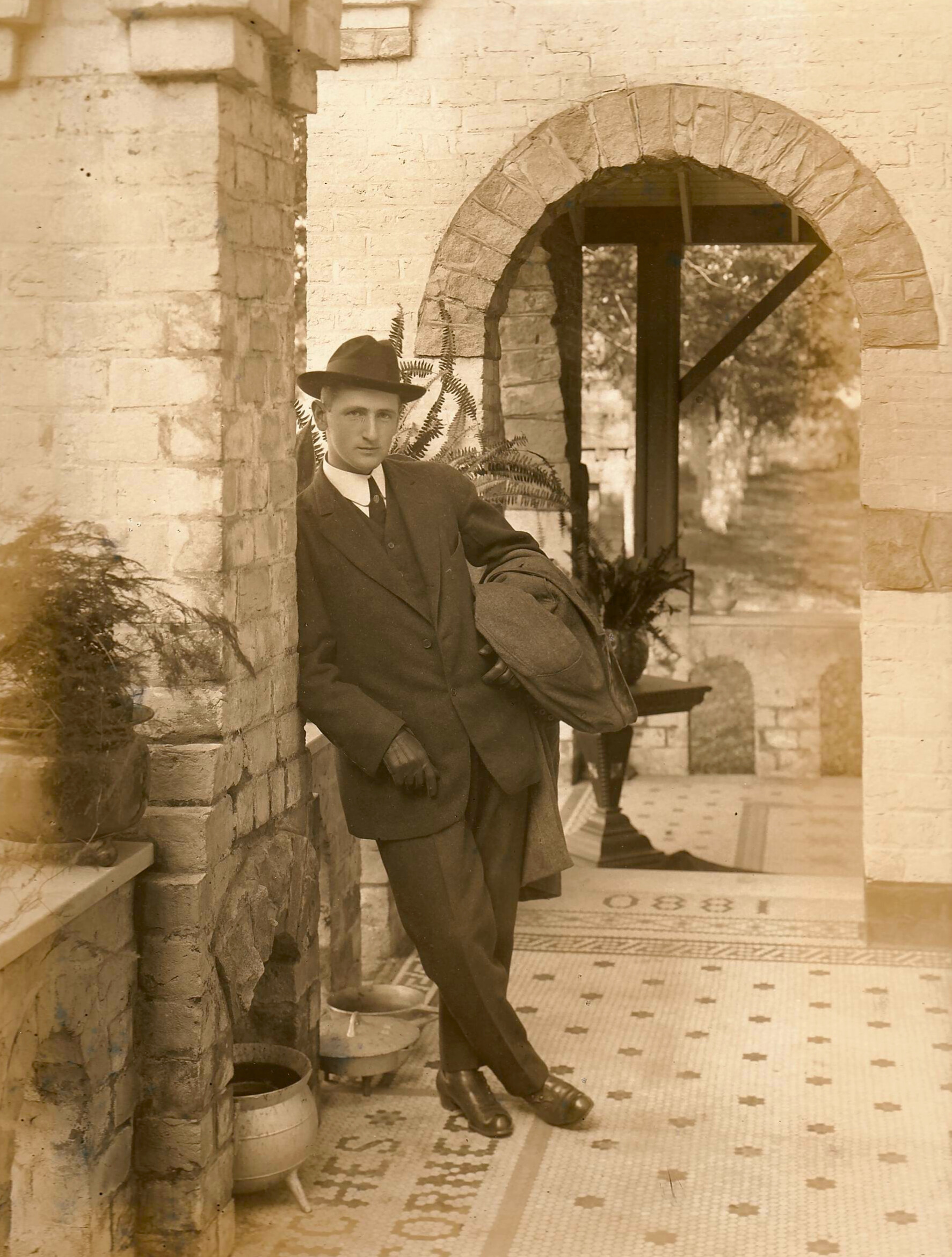
This image is of Gilmer Körner, taken around 1905. He is standing on the front porch of Körner’s Folly. It was taken the year he transferred out of Guilford College and began his education at Trinity College.
In 1904, after spending time at Guilford College, where both Doré and Gilmer Körner had previously attended boarding school, Gilmer decided he no longer wished to remain there. After sharing his concerns with his father, Jule Körner utilized his professional connections in Durham to arrange for Gilmer’s transfer to Trinity College (later Duke University), where he could continue his education. Delighted by this new opportunity, Gilmer wrote enthusiastically about his arrival, expressing excitement for both his immediate plans and his future at the institution.
Despite the challenges of transferring mid-year, Jule Körner ensured that Gilmer’s transition was a smooth one. He successfully secured accommodations for his son and even arranged for tasteful decorations to furnish and personalize Gilmer’s new dormitory room, reflecting both care and attention to detail during this important moment in Gilmer’s life. Gilmer wrote , “It is quite a lovely place. There is hardly any dorm room left, but in yesterday’s discussion with Papa it had been arranged that Rm 28 on the SW corner would be cleared out for my occupancy. It was currently being used as a storage room. By the time I got there it had been cleaned out and furnished, but Papa had ordered a paper-hanger and a painter to paper and paint the room…. Papa is going to ship me some broadloom rugs with which to carpet my quarters – – both the study and the sleeping alcove; and, also, a large, comfortable wicker arm chair and some cushions. When I first walked into my room #28 I had a peculiar experience. It was in the form of a most definite sensation or feeling that I have seen and had been in this room before and that I was quite familiar with its entire layout as well as with the view from the windows! I cannot explain this, but it was very definite and certain like a settled conviction of the familiarity with a well-known scene!”
Gilmer would finish his early education at Trinity College in 1907, and later moved on to law courses at Harvard University. Eventually, Gilmer received his law certificate and began a firm in the Washington, D.C. area, while also serving as a presiding judge on the Board of US Tax Appeals Court.