



Collections Spotlight: Körner Family Baking Tools
With winter right around the corner and the upcoming holidays filled with delicious foods and warm baked goods, this November we highlight several Körner family baking tools on display in the Main Kitchen of Körner’s Folly. No Victorian kitchen would be complete without the many implements used to prepare delicious seasonal foods, including a four-tiered pie rack, pie crimper, a pie ventilator, as well as other helpful tools such as cherry pitters. Made from materials such as tin and iron, these kitchen implements helped create the many beautiful desserts that would accompany a Thanksgiving meal or holiday gathering. From removing cherry pits to creating a decorative crust, these objects helped transform basic ingredients into the finished pies and other treats enjoyed by Victorian-era families.
By the Victorian period, cooking had changed significantly from the hearth-centered kitchens and individually made implements of earlier generations to an increasing variety of mass-produced kitchen tools designed for specific culinary tasks. A well-stocked kitchen was an important part of maintaining a well-run and hospitable home. Hospitality and socializing were central to Victorian domestic life, and offering visitors tea and a small treat was a common way to welcome guests into the home. For Victorian women in particular, the ability to provide refreshments for unexpected visitors or planned gatherings was an important part of domestic hospitality. As a result, baked goods such as pies, cakes, and cookies were often prepared for teas, social visits, family meals, and other occasions. The growing availability of specialized baking implements made it easier for home cooks to prepare these foods efficiently, and with an eye toward presentation.
The Körner family’s baking tools are great examples of the mass-produced utensils that became increasingly available after industrialization. Because cooking and food preparation were time-consuming tasks, items designed for convenience became increasingly popular with consumers. Tools such as cherry pitters, also known as “cherry stoners,” could quickly remove the pits from cherries and other seeded fruits, saving considerable time when preparing seasonal fruit pies, preserves, and other dishes. Made from durable materials such as iron, these mechanical devices allowed home cooks to process larger quantities of fruit with much less effort, leaving more time for other household tasks or pursuits. Cherry pitters were just one example of the growing collection of specialized kitchen tools designed to make food preparation more efficient.
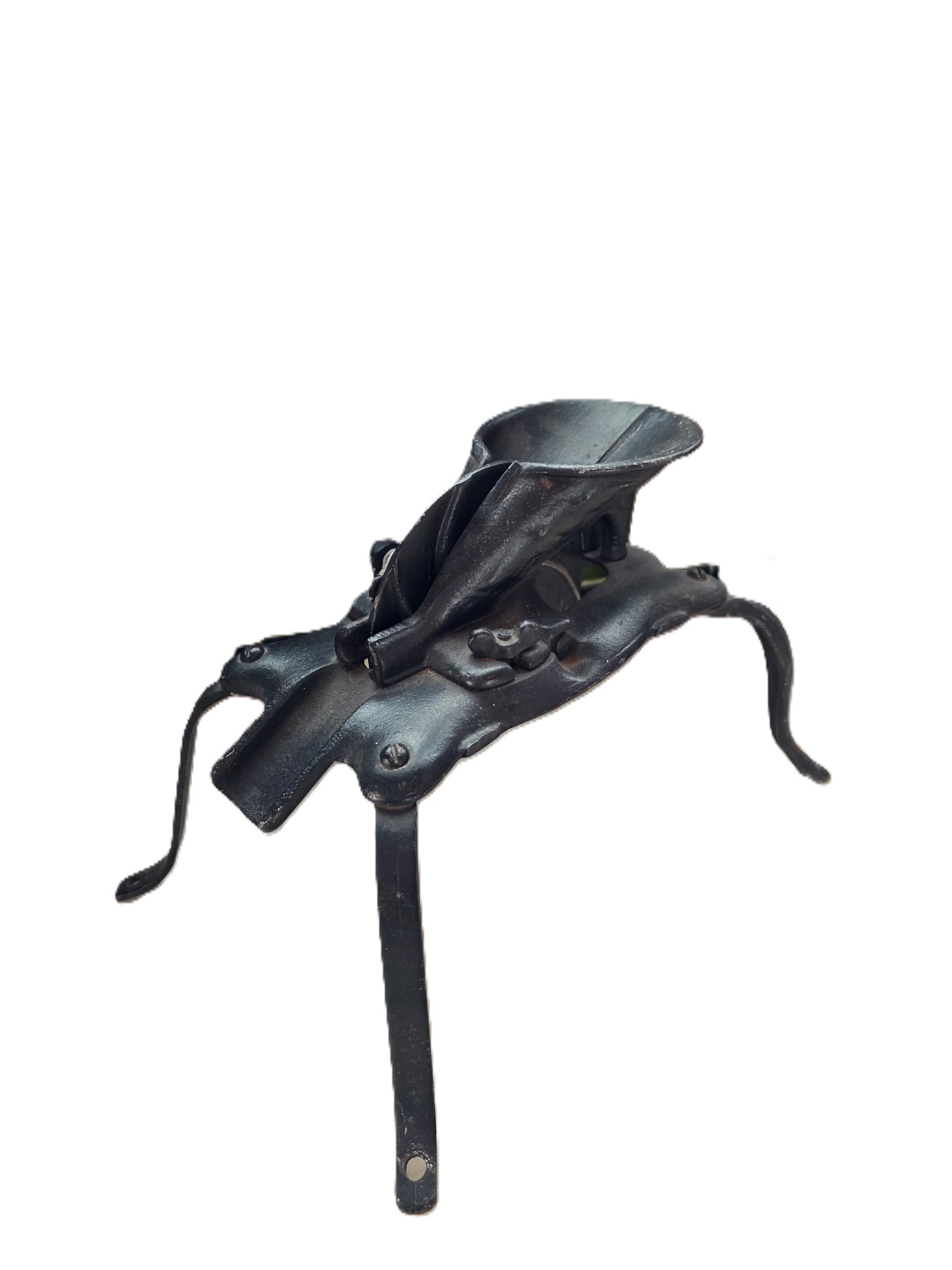
Circa, 1900, this is a cherry pitter, or “stoner,” used by the Körner family.
Pie ventilators were another clever invention of convenience that became popular during the Victorian period. Early examples were made from materials such as ceramic or iron and could take a variety of forms, including birds, chimneys, and other decorative shapes. A pie ventilator was placed through the crust of an uncooked pie before baking, allowing steam produced by the cooking fruit to escape rather than becoming trapped beneath the crust. Without a means for the steam to escape, a pie could bubble over, rupture, or become soggy, creating extra work for the cook and potentially ruining the finished dessert.
The Körner family’s pie ventilator is shaped like a star, which would leave a decorative impression in the center of the pie crust. The small holes in the top allowed steam to escape during baking. Like many Victorian kitchen implements, this simple tool combined practicality with a touch of decoration, helping the cook produce a better-finished pie while adding an attractive detail to the crust.
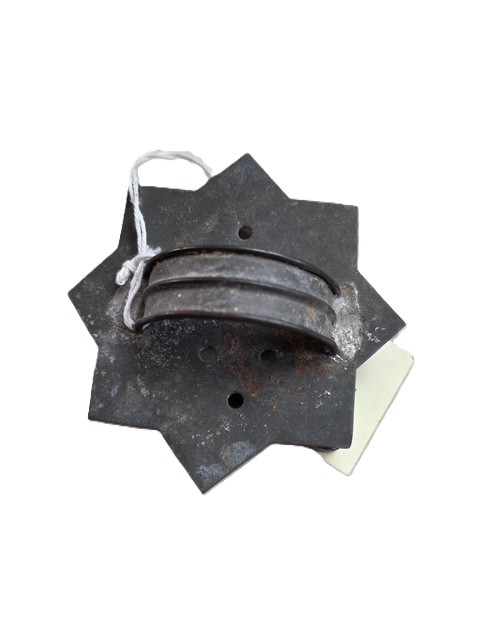
Circa 1900, a star shaped pie ventilator used by the Körner family.
Pie stands and pie jaggers, or crimpers, were also useful tools for saving time and space in the Victorian kitchen. A busy kitchen could quickly become crowded with cooling dishes, baking pans, and other equipment, making efficient use of available space an important consideration. Earlier pie and cooling racks could be large and cumbersome, while the introduction of tiered metal racks provided a more compact way to cool several pies at once. The Körner family’s four-tiered pie rack allowed multiple pies to cool while occupying only a small amount of counter space.
Pie jaggers, or crimpers, offered both convenience and decoration. The tool could be used to trim, cut, and seal the edges of pastry, joining the top and bottom crusts while creating a decorative pattern around the edge. Rather than shaping each crust entirely by hand, a crimper allowed the cook to create a consistent and attractive finish with a simple motion. Like many specialized Victorian kitchen implements, the pie crimper combined practicality with presentation which could help a cook save time while still producing a beautifully finished dessert.

Just as hospitality and cooking still go hand-in-hand today, it too was especially true of Victorian domestic life. Victorian kitchen tools weren’t only about efficiency, they could also help produce food that was visually appealing, which mattered when baked goods were part of hospitality and entertaining. Next time you are touring Körner’s Folly, check out the helpful tools the family used when making their delicious baked items.
From the Archives: Gilmer Körner’s Recounting of Thanksgiving at Körner’s Folly in 1907
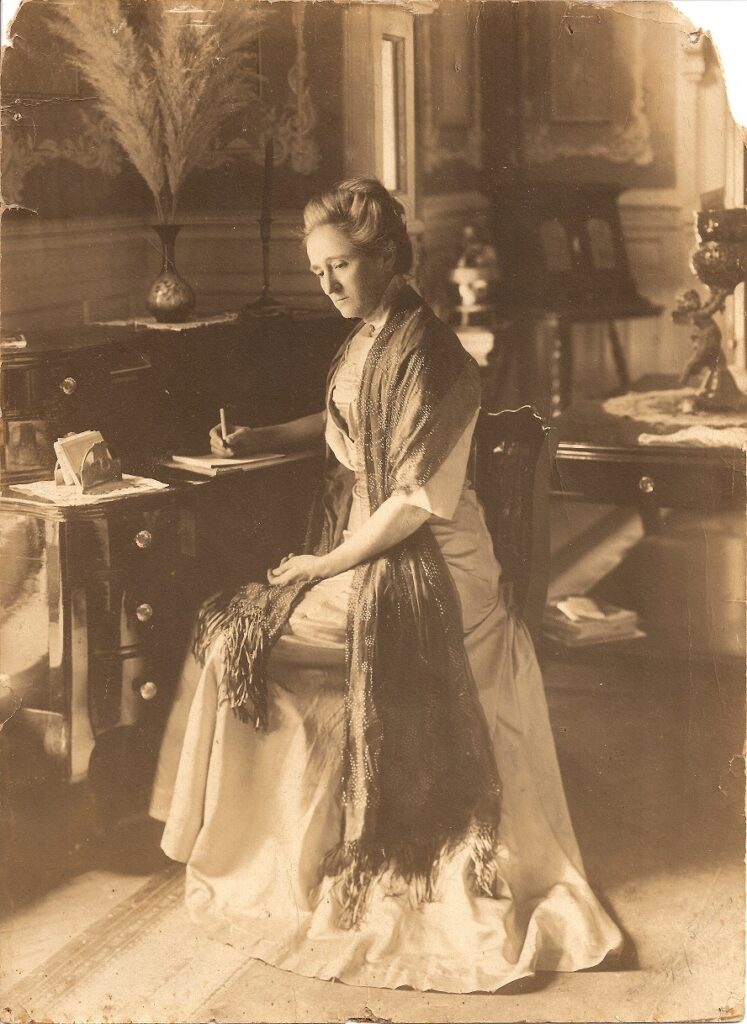
A gracious hostess, Polly Alice Masten Körner took great pride in welcoming family and friends to Körner’s Folly. She would have played an important role in planning the menus, refreshments, and festivities that brought guests together for holiday celebrations in the home.
Thanksgiving is a wonderful time for American families and friends to come together and enjoy delicious foods, fellowship, and fun. In 1907, although away from his family for the holiday, Gilmer wrote of his Thanksgiving and the time his family were having at Körner’s Folly. On November 28th, Gilmer wrote “I am spending the Thanksgiving holiday with my classmate and fratmate [sic] L. G. “Reddy” White at his home in Portsmouth, VA.
At home in Kernersville, Mama and Papa and Doré had a number of Thanksgiving dinner guests: Uncle Joe Körner and daughter Estelle, Aunt Sallie Körner, Uncle Henry Körner and son Philip. Mama wrote me the menu and it’s worth remembering. Soup. Turkey. Cranberry Sauce. Mashed Potatoes. Macaroni. Pickled Peppers. Cucumbers. Pumpkin Pie. Apple Float. Walnut Cake. Marble Cake. Apples. Raisins. Coffee.”
Gilmer’s 1907 Thanksgiving menu offers a wonderful glimpse into a holiday meal at Körner’s Folly more than a century ago. From turkey and cranberry sauce to pumpkin pie, walnut cake, and marble cake, the abundance of the meal reflects the importance of food and hospitality during the holiday season. Although Gilmer was celebrating Thanksgiving away from home, his mother’s carefully recorded menu allowed him to share, in a small way, in the festivities taking place at Körner’s Folly.